

What started in the desert, became twenty years of expertise in Visible Emissions
VIRTUAL TECHNOLOGY LLC
About Virtual Technology LLC
Virtual Technology builds digital monitoring systems for a problem that has remained largely unchanged for decades: how we measure visible emissions.
Founded in 2006 in Rio Rico, Arizona, Virtual Technology grew from a research and development project with the U.S. Department of Defense into a specialized environmental technology company focused on visible emissions monitoring and compliance.
The company was founded by environmental technology veteran Shawn Dolan, whose career spans more than three decades in environmental monitoring, regulatory compliance, and sustainable infrastructure. Before founding Virtual Technology, Shawn worked on enterprise Environmental, Safety, and Occupational Health solutions and air-quality monitoring programs serving government and large-scale organizations.
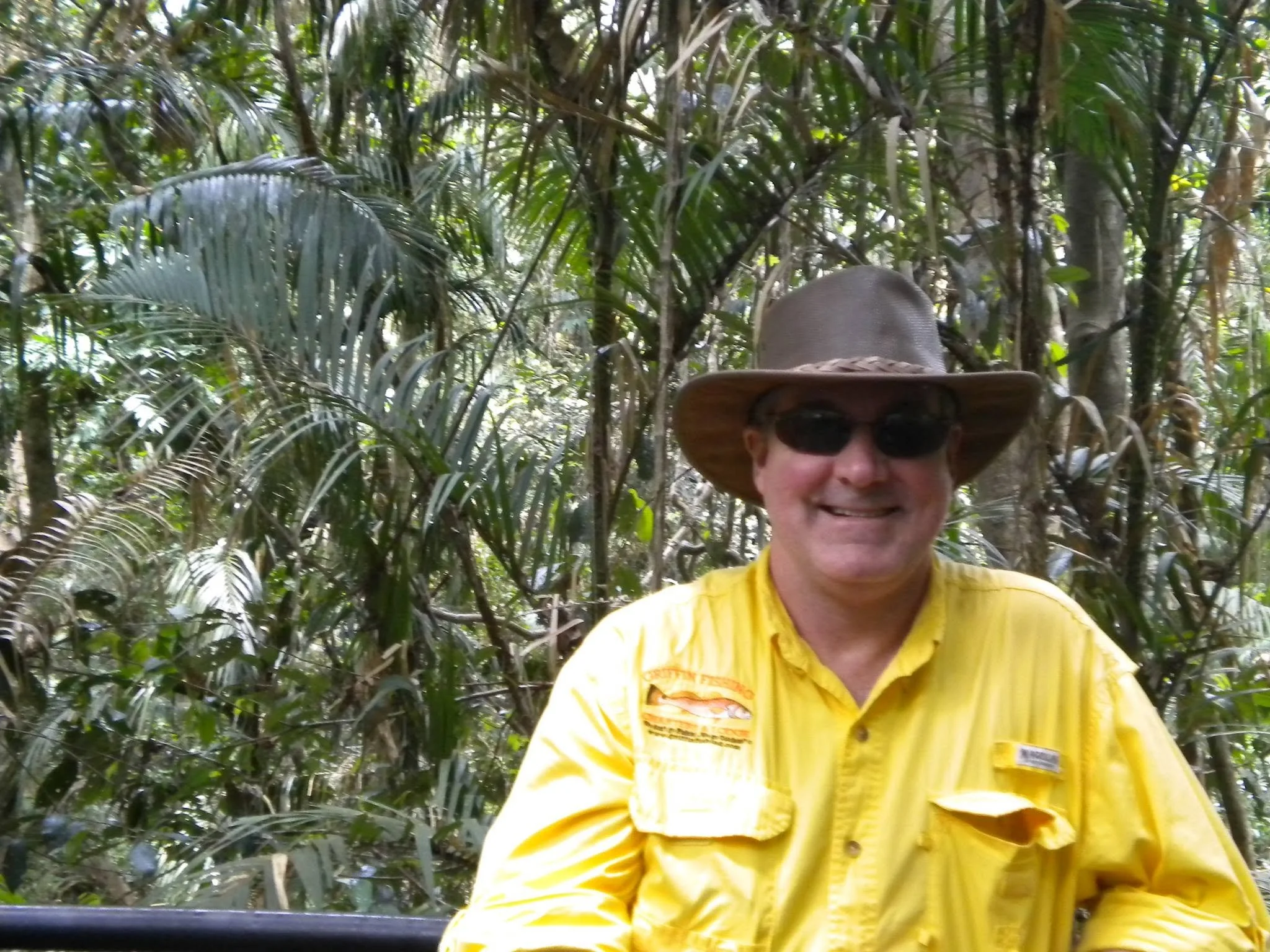
Shawn Dolan, VTLLC Founder & President
In 2006, the U.S. Department of Defense awarded Virtual Technology its first research and development contract to develop automated technology for measuring and documenting the opacity of visible emissions. That project became the foundation of the company itself.
The work addressed a fundamental gap in environmental monitoring. While many pollutants can be measured through automated instruments that detect their unique chemical signatures, visible emissions have historically relied on human observation. Opacity—the measure used to determine the density of visible emissions—continues to be evaluated primarily through EPA Method 9, a visual observation methodology developed in the late 1960s.
Virtual Technology saw an opportunity to bring modern imaging and data technology to a measurement that had remained largely manual.
That research ultimately led to the development of DOCS II, the Digital Opacity Compliance System—a technology platform designed to capture, analyze, and document visible emissions through digital monitoring.
Today, Virtual Technology and its team remain based in Rio Rico, Arizona, continuing the work that began with that original Department of Defense research project. The company serves both regulated facilities and regulatory agencies, providing technology designed to make visible emissions monitoring more consistent, documented, and defensible.




OUR TRACK RECORD
Twenty years of turning federal research contracts into methods that agencies actually accept.
DOCS II for the Department of Defense
2006-2008The Department of Defense was spending roughly $15 million a year certifying human Method 9 observers across its regulated sources. We were contracted in 2006 to test and validate the prototype, then rebuilt the system around what field observers and state inspectors said they needed. DOCS II shipped in 2008.
Client: US DoD / USAF
Outcome: Production platform, ongoing federal funding
ASTM D7520 standard development and certification
2009A digital method is only useful if regulators can adopt it. We worked toward a consensus standard through ASTM committee D22 on air quality, which approved D7520 in October 2009 as the performance standard for opacity measurement by digital camera. DOCS II completed certification under it the same year.
Partner: ASTM Committee D22
Outcome: Basis for EPA ALT-082 acceptance
National training and distribution
2010Adoption depended on the existing smoke school infrastructure, so we partnered with the country's largest smoke school operator to train and distribute DOCS II to field readers nationally rather than building a parallel training pipeline.
Partner: Eastern Technical Associates
Outcome: National operator training
EPA's Emissions Measurement Center approved ASTM D7520 as an alternative to Reference Method 9 for demonstrating compliance with federal opacity limits, subject to defined conditions. Published in February 2012 as a broadly applicable alternative method, it applies in lieu of Method 9 across 40 CFR Parts 60, 61 and 63. That approval is what allows a digital camera observation to stand in place of a reading made by eye.
Authority: US EPA, Emissions Measurement Center
Outcome: Federal acceptance of the method
EPA approval under ALT-082
2012DOCS II is in use outside the United States, including in Sri Lanka, Mexico and El Salvador.
Outcome: International adoption
International use
CurrentEPA ALT-082
Broadly Applicable Alternative Method 082, can be used in lieu of Method 9 for all of 40CFR60, 61, and 63.
Published Feb 2012.
ASTM D7520
Certified under the Digital Camera Opacity Technique (DCOT) our work helped establish
Required by EPA
The specified opacity method under the Ferroalloys NESHAP
DoD & USAF
Developed under federal R&D contract beginning 2006
GSA SCHEDULE
Available for
direct government procurement

Our mission is simple: turn what was once primarily an observation into a reliable digital record.
— Shawn Dolan, Founder & CEO